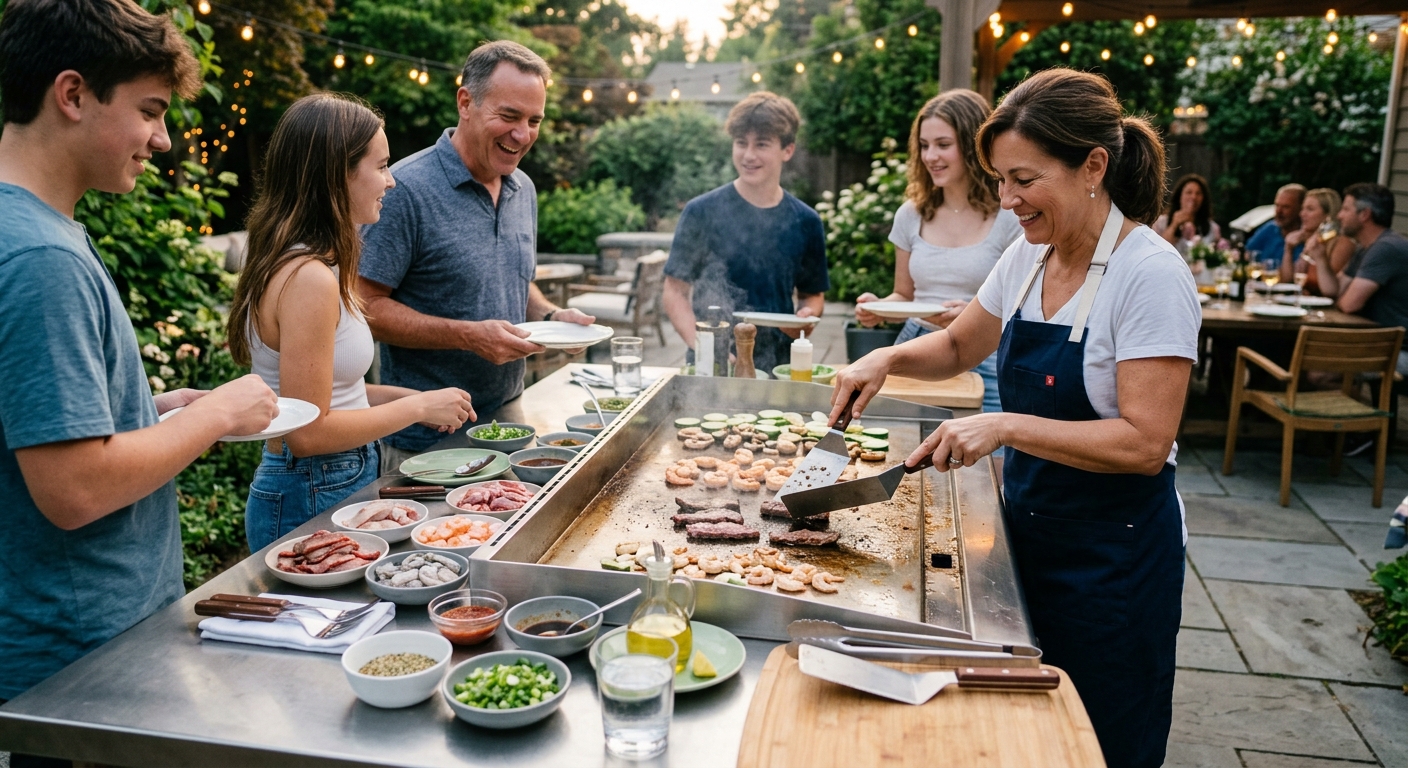
Introduction to Hosting a Teppanyaki Party
Hosting a DIY teppanyaki grill party is an excellent way to combine delicious food with interactive entertainment right in your own backyard or dining room. The sizzling sounds, the savory aromas, and the visual flair of cooking right in front of your guests make for an unforgettable culinary experience. Whether you are celebrating a special occasion or simply want to elevate your weekend dinner plans, having a solid plan is essential. To ensure everything goes smoothly, you can follow A Simple Checklist for a Memorable Teppanyaki Party to stay organized from start to finish.
Essential Equipment for Your Grill Party
The centerpiece of your party is, of course, the teppanyaki grill itself. You can choose between electric indoor griddles or larger outdoor propane flat tops. Whichever you choose, ensure you have the proper tools to cook like a pro. Essential items include two high-quality stainless steel spatulas for flipping and tossing, a scraping tool to keep the cooking surface clean, and squeeze bottles for oils, soy sauce, and water.
For those looking to take the party outside, preparing your patio or backyard requires a bit of extra thought. Make sure you have adequate lighting, comfortable seating, and a safe distance between the grill and your guests. For more detailed outdoor preparation tips, consult A Complete Guide to Planning an Outdoor Teppanyaki Night.
The Ultimate Ingredient Checklist
Teppanyaki thrives on high-quality, fresh ingredients. Because the cooking method is fast and uses minimal seasoning, the natural flavors of the food must shine through.
Proteins
- Steak: Ribeye, New York strip, or filet mignon, cut into bite-sized cubes.
- Chicken: Boneless, skinless thighs or breasts, sliced evenly.
- Seafood: Large shrimp (peeled and deveined), scallops, and salmon.
- Tofu: Extra-firm tofu pressed and cubed for vegetarian guests.
Vegetables
- Zucchini and yellow squash
- Mushrooms (cremini or shiitake)
- Onions (sweet or red)
- Carrots (julienned or thinly sliced)
- Broccoli florets
Carbs and Sides
Fried rice or yakisoba noodles are classic teppanyaki accompaniments. Pre-cook your rice a day in advance and chill it; cold rice fries up much better and prevents a mushy texture on the grill. You might even want to check out some local ingredient sourcing tips on local food resources to elevate your dish quality.
Sauces and Seasonings
The magic of teppanyaki often lies in the dipping sauces. Prepare these ahead of time so the flavors have time to meld.
- Yum Yum Sauce: A creamy, sweet, and tangy mayonnaise-based sauce.
- Ginger Sauce: Perfect for dipping steak and vegetables.
- Mustard Sauce: A sharp, savory sauce that pairs excellently with chicken and pork.
- Basic Seasonings: Have plenty of garlic butter, soy sauce, salt, black pepper, and toasted sesame seeds on hand.
Comparing Teppanyaki Grill Types
If you are trying to decide which type of grill to purchase or rent for your party, here is a quick comparison of popular at-home options.
| Grill Type | Power Source | Best Location | Heat Control |
|---|---|---|---|
| Electric Griddle | 120V Outlet | Indoors | Thermostat Dial |
| Propane Flat Top | Liquid Propane | Outdoors | Burner Knobs |
| Stovetop Griddle Pan | Gas/Electric Stove | Indoors | Stove Knobs |
Preparation and Cooking Timeline
Timing is everything when hosting a live cooking event. Do all your chopping, marinating, and sauce-making hours before your guests arrive. Arrange all ingredients in separate bowls or on a large platter so you can grab them quickly while cooking. Start by cooking the fried rice or noodles and moving them to a cooler zone of the grill. Next, cook your vegetables, followed by the seafood, chicken, and finally, the steak.
Conclusion
Hosting a DIY teppanyaki grill party is an exciting way to gather friends and family for a highly interactive and delicious meal. By ensuring you have the right equipment, preparing your ingredients and sauces ahead of time, and maintaining a fun, engaging atmosphere, your teppanyaki night is sure to be a massive success. Follow this checklist, practice your spatula flips, and get ready to impress your guests with a memorable culinary performance.
Frequently Asked Questions
What kind of oil should I use for a teppanyaki grill?
It is best to use an oil with a high smoke point, such as canola, vegetable, avocado, or grapeseed oil. Avoid extra virgin olive oil or butter for the initial cooking, as they will burn at high temperatures, though butter can be added at the end for flavor.
Can I host a teppanyaki party indoors?
Yes, you can host an indoor teppanyaki party using an electric tabletop griddle. Ensure your dining area is well-ventilated, or cook near an open window or exhaust fan to manage the smoke and steam generated during cooking.
How do I clean my teppanyaki grill after the party?
While the grill is still warm, squirt a small amount of water onto the surface to loosen food particles. Use your grill scraper to scrape the debris into the grease trap. Wipe the surface clean with a damp cloth or paper towel, then apply a light coat of cooking oil to protect the surface from rust.
Comments
Post a Comment