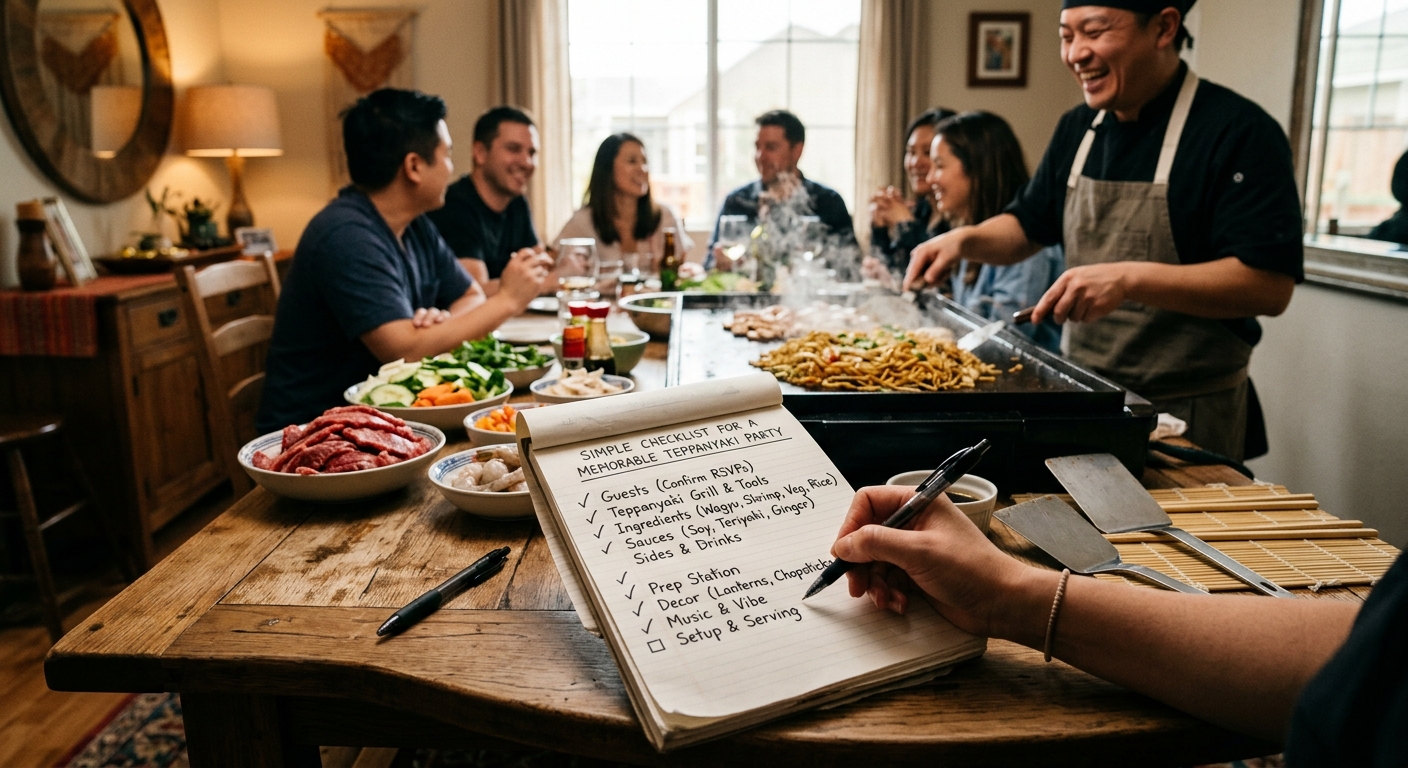
Hosting a teppanyaki party is a fantastic way to bring family and friends together for an interactive, delicious, and entertaining dining experience. Unlike traditional dinner parties, a teppanyaki gathering allows guests to watch their food being prepared right before their eyes, often accompanied by the flair and skill of the chef. However, pulling off a successful event requires careful planning and organization. This simple checklist for a teppanyaki party will guide you through every step of the process, ensuring a seamless and memorable evening for everyone involved.
1. Essential Equipment Setup
The foundation of any great teppanyaki party is the cooking setup. You don't need a commercial-grade grill, but you do need the right tools to replicate the experience at home. Your primary piece of equipment is a flat iron griddle or an electric teppanyaki grill. Make sure it is large enough to handle multiple ingredients simultaneously. If you are planning to host the event outside, you might want to explore The Ultimate Guide to an Outdoor Kitchen Hibachi Party Setup for inspiration on arranging your cooking station.
Alongside the grill, you will need a set of high-quality teppanyaki tools. These include two stainless steel spatulas for flipping and chopping, a sharp chef's knife, a scraping tool to keep the grill clean between courses, and squeeze bottles for oil, soy sauce, and water. Proper ventilation is also crucial if you are cooking indoors; otherwise, ensure your outdoor setup is stable and protected from the wind.
2. Ingredient Sourcing and Prep
Teppanyaki relies heavily on the freshness and quality of its ingredients. The beauty of this cooking style is its versatility, allowing you to cater to various dietary preferences. Your shopping list should include proteins, vegetables, and starches. For a deep dive into what you need, review these Essential Ingredients for a Home Hibachi Party.
- Proteins: Thinly sliced steak, chicken breast, shrimp, scallops, and firm tofu are classic choices.
- Vegetables: Zucchini, onions, mushrooms, bean sprouts, and bell peppers grill beautifully.
- Carbohydrates: Pre-cooked short-grain rice (ideal for fried rice) and yakisoba noodles.
- Sauces and Seasonings: Soy sauce, teriyaki sauce, garlic butter, sesame oil, and salt and pepper.
Preparation is key. Ensure all ingredients are chopped, marinated (if desired), and organized into small bowls before the guests arrive. This allows the cook to focus on the grilling process rather than scrambling for ingredients.
3. Table Setting and Atmosphere
Creating the right ambiance enhances the teppanyaki experience. Since the cooking is the main event, arrange seating so that everyone has a clear view of the grill. If you are serving a large group, you might consider setting up a buffet style for the finished dishes. For those looking to explore more local culinary inspirations to set the mood, you can check out local food trends to see what complementary appetizers or drinks might impress your guests.
Keep the table setting simple but elegant. Provide chopsticks, small dipping bowls for sauces (like ginger sauce and mustard sauce), and sturdy plates that can handle hot food straight from the grill. Soft lighting, Japanese-inspired background music, and perhaps some sake or plum wine can complete the atmosphere.
Below is a quick comparison of popular teppanyaki protein choices to help you plan your menu quantities and cooking order.
Here is a comparison of common teppanyaki proteins regarding their cooking times and flavor profiles:
| Protein Type | Estimated Cooking Time | Typical Seasoning | Heat Requirement |
|---|---|---|---|
| Sirloin Steak | 4-6 minutes | Garlic butter, soy sauce | High heat |
| Chicken Breast | 6-8 minutes | Teriyaki, sesame oil | Medium-high heat |
| Jumbo Shrimp | 3-4 minutes | Lemon, garlic, butter | Medium heat |
| Firm Tofu | 5-7 minutes | Soy sauce, ginger | Medium heat |
4. Safety Considerations
Cooking at high temperatures in close proximity to guests requires strict adherence to safety protocols. Make sure the grill is placed on a heat-resistant, stable surface. Keep a fire extinguisher or a heavy box of baking soda nearby, especially when cooking with oil. Warn guests, particularly children, about the heat radiating from the grill. Lastly, use a food thermometer to ensure all poultry and meats are cooked to their safe internal temperatures.
Conclusion
Hosting a teppanyaki party is a rewarding endeavor that combines culinary skill with interactive entertainment. By following this simple checklist—ensuring your equipment is ready, your ingredients are prepped, your atmosphere is inviting, and your safety measures are in place—you can guarantee a successful and joyous gathering. With a little planning, you will provide an unforgettable dining experience that will leave your guests eagerly anticipating your next event.
Frequently Asked Questions
What kind of oil is best for teppanyaki cooking?
Vegetable oil, canola oil, or soybean oil are excellent choices for teppanyaki because they have high smoke points and neutral flavors that won't overpower the ingredients.
Can I host a teppanyaki party indoors?
Yes, you can use an electric electric teppanyaki griddle indoors. However, you must ensure excellent ventilation, such as turning on the exhaust fan and opening windows, as the cooking process generates a lot of smoke and steam.
How do I clean the teppanyaki grill during the party?
Between cooking different courses, use a grill scraper to remove food debris. Then, squirt a little water onto the hot surface and quickly wipe it down with a thick, folded damp towel using your tongs. This prevents flavors from mixing and keeps the grill slick.
Comments
Post a Comment