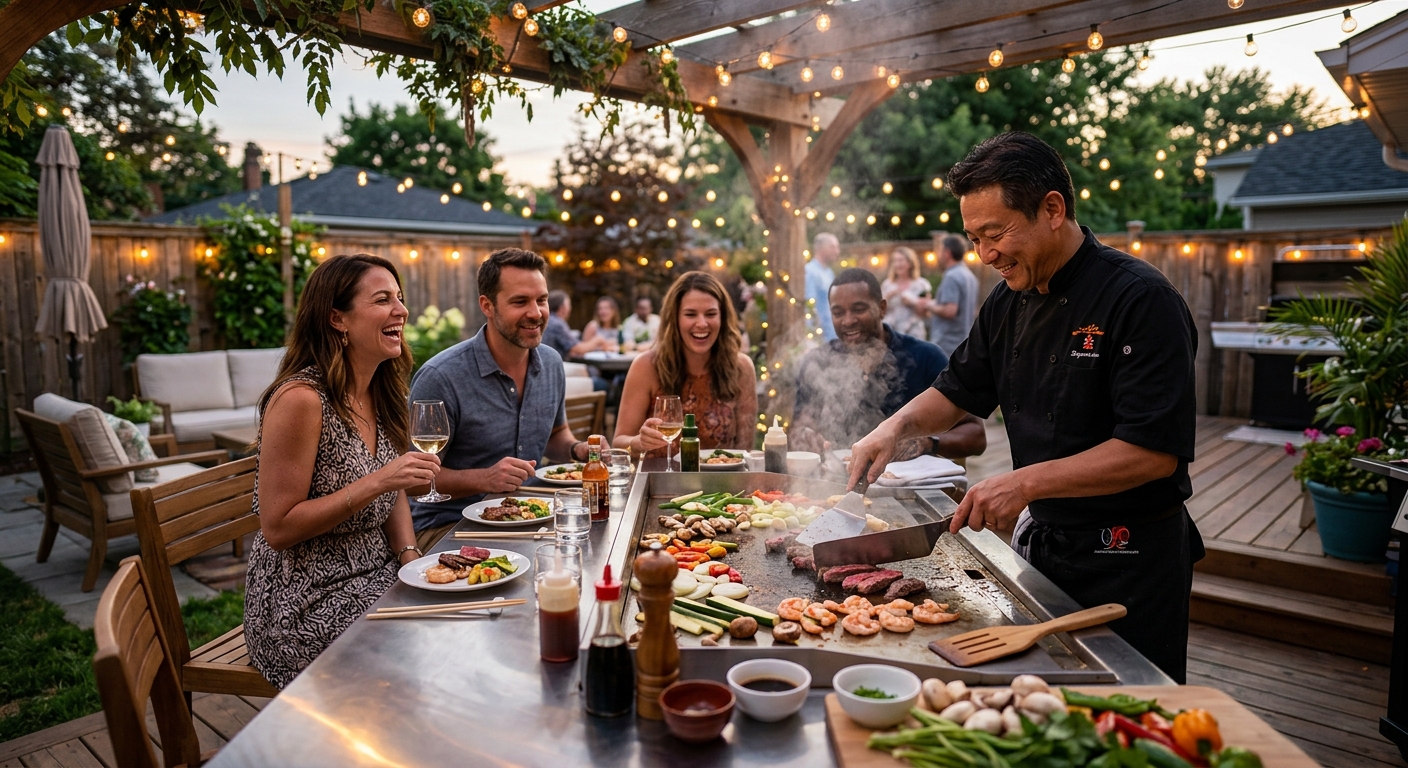
Introduction to Outdoor Teppanyaki
Hosting an outdoor teppanyaki night is an excellent way to combine delicious food with interactive entertainment right in your own backyard. Originating in Japan, teppanyaki refers to cooking on an iron griddle, typically featuring an array of fresh meats, seafood, and vegetables. Planning an outdoor teppanyaki night requires careful preparation, the right equipment, and a curated menu to ensure your guests have an unforgettable culinary experience.
Choosing the Right Equipment
The centerpiece of any teppanyaki event is the grill. When selecting a teppanyaki grill for home use, you want a flat, smooth cooking surface that can reach high temperatures evenly. Whether you opt for a built-in outdoor kitchen griddle, a freestanding gas griddle, or a portable electric version, maintaining the temperature is crucial for the perfect sear.
For a detailed breakdown of the gear you need, check out this resource on Essential Items for a Home Hibachi Party: A Professional Guide. Having the proper spatulas, scraper blades, and squeeze bottles for oils and sauces will elevate your cooking from amateur to professional.
Preparing Your Teppanyaki Menu
A well-planned menu is vital. Teppanyaki is all about fresh, high-quality ingredients cooked simply to highlight their natural flavors. Consider a progression of courses starting with a light salad with ginger dressing, followed by fried rice, and finishing with an array of proteins and vegetables.
Here is a comparison of popular proteins for your teppanyaki night:
| Protein Type | Preparation Method | Cooking Time | Best Paired Sauce |
|---|---|---|---|
| Ribeye Steak | Cut into bite-sized cubes | 3-4 minutes | Mustard Sauce |
| Jumbo Shrimp | Peeled and deveined | 2-3 minutes | Yum Yum Sauce |
| Chicken Breast | Sliced into strips | 5-7 minutes | Teriyaki Sauce |
| Scallops | Pat dry before searing | 3-4 minutes | Ginger Sauce |
Vegetables and Sides
Don't forget the vegetables. Zucchini, onions, mushrooms, and broccoli are classic teppanyaki sides. Keep your vegetables crisp and vibrant by flash-cooking them with a splash of soy sauce and garlic butter. Fried rice is another staple; cooking it on the griddle allows the rice to achieve a delightful texture and smoky flavor.
Setting the Stage for Your Event
Creating the right atmosphere is just as important as the food. Ensure your seating arrangement allows everyone a good view of the cooking action. Proper lighting, outdoor heating if necessary, and a clean, organized prep station will keep the evening flowing smoothly. For those looking to explore more local culinary inspirations for their events, visiting a local food guide can provide wonderful seasonal ideas.
Organization is key to managing a live cooking event. To ensure you don't miss a single detail, utilize The Ultimate Home Hibachi Catering Prep Checklist for a Flawless Event. Prepping your ingredients, sauces, and tools before the guests arrive will allow you to focus on cooking and entertaining.
Safety and Entertainment
Cooking with high heat and open flames requires attention to safety. Keep a fire extinguisher nearby and ensure the grill is set up on a stable, non-combustible surface away from low-hanging branches. If you plan to incorporate the classic onion volcano or shrimp tail toss, practice beforehand to ensure you can perform them safely.
Conclusion
Planning an outdoor teppanyaki night is a rewarding endeavor that brings the excitement of a Japanese steakhouse directly to your backyard. By investing in the right equipment, preparing a diverse and fresh menu, and organizing your space for both safety and entertainment, you can host a memorable culinary event. With practice and preparation, your backyard teppanyaki night will be a resounding success.
Frequently Asked Questions
What is the difference between teppanyaki and hibachi?
Teppanyaki uses a solid, flat iron griddle to cook food, allowing for the cooking of smaller ingredients like rice and finely chopped vegetables. Hibachi traditionally refers to an open-grate barbecue grill over charcoal, though in North America, the terms are often used interchangeably to describe interactive griddle cooking.
What kind of oil should I use for a teppanyaki grill?
It is best to use an oil with a high smoke point, such as vegetable oil, canola oil, avocado oil, or safflower oil. Butter or sesame oil can be added at the end of the cooking process for flavor but should not be used as the primary cooking fat due to their lower smoke points.
How do I clean my teppanyaki grill after use?
While the grill is still warm (but not dangerously hot), use a scraper to remove food debris. Pour a small amount of water or club soda on the surface to lift stubborn spots, scrape again, and wipe clean with a thick towel. Finally, apply a thin coat of cooking oil to season the surface and prevent rust.
Comments
Post a Comment