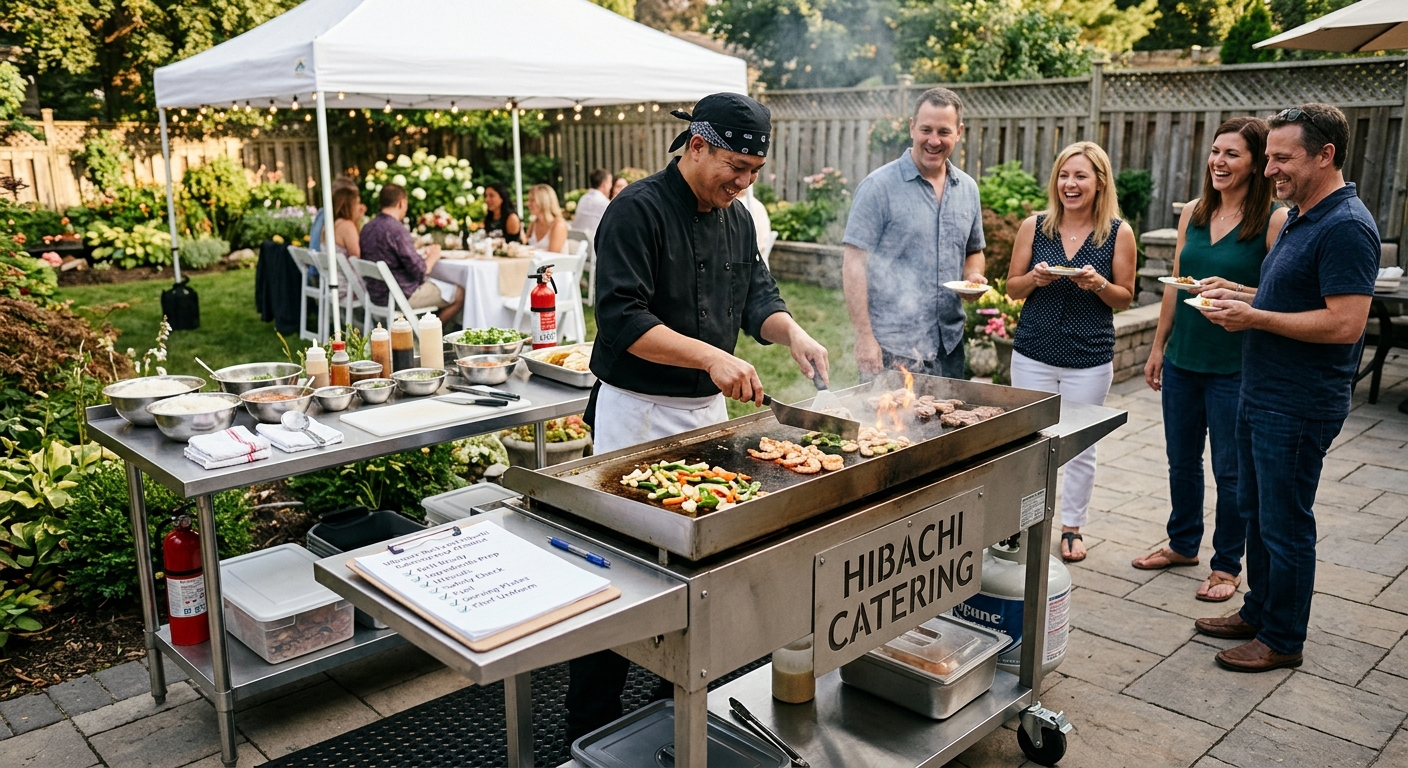
Hosting a backyard hibachi party brings the excitement, flavor, and entertainment of a traditional Japanese steakhouse right to your home. Whether you are a private chef preparing for a gig or a homeowner organizing an event, having a comprehensive backyard hibachi catering setup checklist is essential for success. In this guide, we will explore the mandatory equipment, spatial requirements, ingredient prep, and ambiance needed to create a memorable culinary experience.
Understanding the Space and Safety Requirements
Before the chef arrives or you start arranging the equipment, it is crucial to evaluate your backyard space. Hibachi grills generate a significant amount of heat and require adequate ventilation. Ensure the setup area is on a flat, stable surface, away from low-hanging branches, flammable materials, and heavy foot traffic. A concrete patio, a sturdy deck, or a flat grassy area with protective matting works best. It is also important to maintain a safe distance between the grill and the guests, typically around three to four feet, allowing the chef room to perform their culinary tricks safely.
Essential Hibachi Cooking Equipment
The core of any hibachi catering event is the equipment. A commercial-grade, portable flat-top grill (teppanyaki) is the star of the show. Accompanying the grill, you will need propane tanks, heavy-duty spatulas, scraper blades, squeeze bottles for oils and sauces, and a reliable meat thermometer. To ensure you have every tool necessary for a flawless performance, review this Hibachi Cooking Party Tool List: The Ultimate Guide for Hosts, which breaks down the specific utensils required by professional chefs.
Ingredient Preparation and Storage
Efficiency is key when cooking on a live fire in front of an audience. All ingredients must be prepped, portioned, and stored at proper temperatures before the show begins. Proteins such as steak, chicken, shrimp, and scallops should be cleaned, cut into bite-sized pieces, and kept in coolers until the exact moment they hit the grill. Vegetables like zucchini, onions, and mushrooms need to be uniformly sliced to ensure even cooking. Additionally, signature sauces like yum yum sauce, ginger sauce, and mustard sauce should be pre-made and placed in easily accessible squeeze bottles or serving cups.
If you are coordinating the menu and overall flow of the event, you can find valuable insights on organizing the culinary timeline by reading about Planning a Japanese Steakhouse Party at Home: A Professional Guide. This resource helps ensure that the transition from appetizers to the main course is seamless.
Guest Seating and Dining Setup
The traditional hibachi experience is highly interactive, and the seating arrangement should reflect that. U-shaped or L-shaped table configurations around the grill allow all guests to have a clear view of the chef's performance. You will need sturdy tables, comfortable chairs, and appropriate tableware, including plates, chopsticks, forks, napkins, and sauce dishes. Consider the lighting as well; if your event extends into the evening, string lights or tiki torches can enhance the ambiance while ensuring the chef has enough light to cook safely.
Below is a comparison of common table setups for backyard hibachi events to help you choose the best configuration for your space.
| Setup Style | Best For | Guest Interaction | Space Requirement |
|---|---|---|---|
| U-Shape | Large Groups (10-15) | High - Everyone sees the chef | Large / Wide |
| L-Shape | Medium Groups (6-10) | Medium - Good view for most | Moderate / Corner |
| Straight Line | Small Groups (4-6) | Low - Ends may miss action | Narrow / Long |
Budgeting for a Private Hibachi Event
Understanding the financial aspects of a backyard hibachi party helps in planning a realistic setup. Costs can vary based on the number of guests, the protein selections (e.g., upgrading from chicken to lobster or wagyu beef), and whether you are hiring a private chef or doing it yourself. When hiring professionals, the fee usually covers the chef's time, the food, and the grill setup. For a detailed breakdown of what you can expect to spend, check out this resource on Private Chef Backyard Hibachi Party Cost: A Complete Guide.
Conclusion
A successful backyard hibachi party requires meticulous planning, from ensuring the safety of the cooking space to gathering the right tools and preparing the ingredients. By following a structured catering setup checklist, you can eliminate stress and focus on what truly matters: providing an entertaining, mouth-watering experience for your guests. With the right equipment, proper seating, and a talented chef, your backyard will transform into the ultimate private Japanese steakhouse.
Frequently Asked Questions (FAQ)
How much space is needed for a backyard hibachi setup?
You typically need a flat area of at least 10x10 feet for the grill and chef, plus additional space for the guest seating arrangement. The area must be well-ventilated and away from flammable structures.
Can I use a regular BBQ grill instead of a flat-top griddle?
While you can cook the same ingredients on a standard BBQ grill, you cannot perform traditional hibachi techniques (like the onion volcano or egg toss) or cook fried rice properly without a solid flat-top griddle.
How long does a private hibachi catering event usually last?
The actual cooking and entertainment portion typically lasts between 1.5 to 2 hours, though chefs usually arrive 1-2 hours early for setup and require about an hour for breakdown and cleanup.
What should I do if it rains on the day of the event?
It is highly recommended to have a backup plan, such as a well-ventilated garage with the door open or a heavy-duty pop-up canopy tent that provides enough clearance for the grill's heat and flames.
Comments
Post a Comment