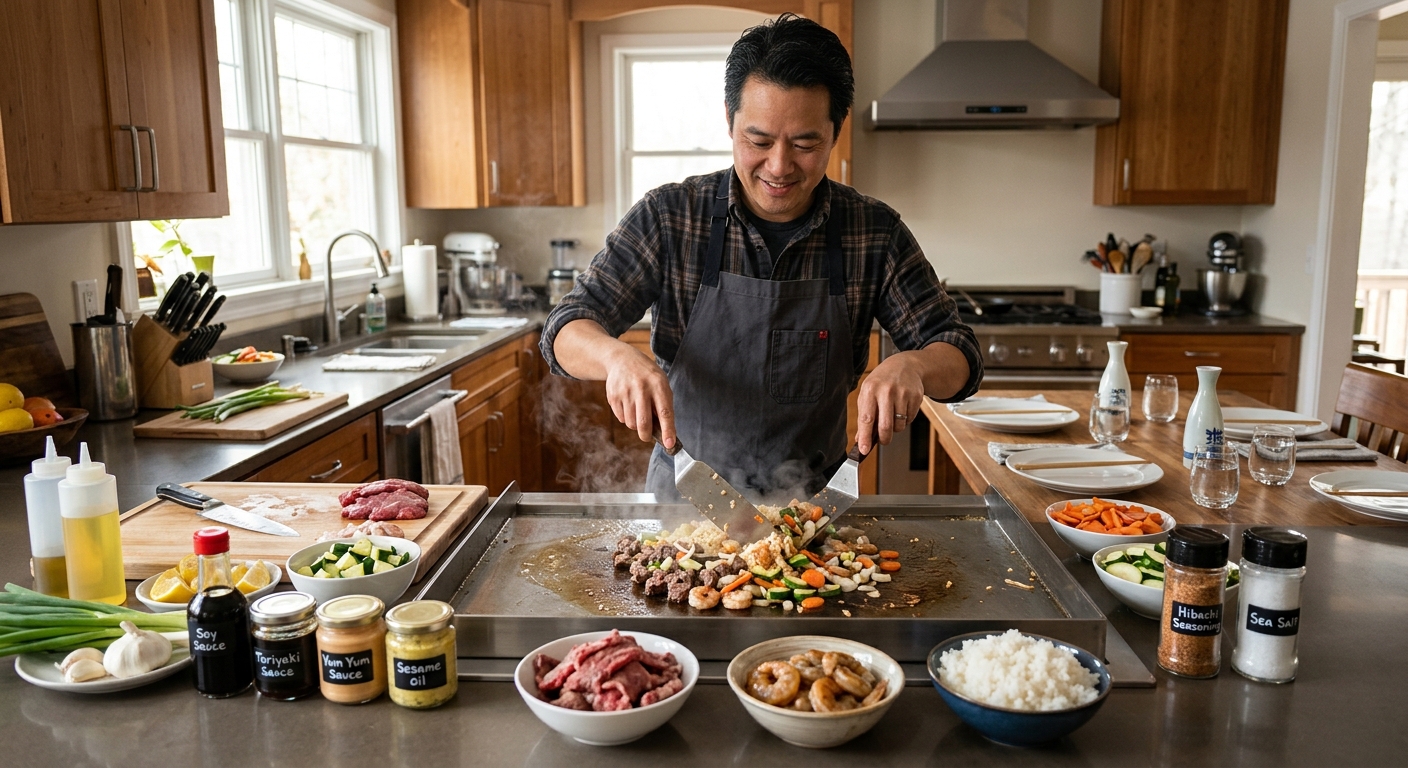
Introduction to At-Home Hibachi
Hosting a hibachi dinner at home is an incredible way to combine culinary excellence with interactive entertainment. Originating in Japan and popularized worldwide, the teppanyaki-style cooking method—often referred to in the West simply as "hibachi"—involves cooking meat, seafood, and vegetables on a large, flat iron griddle. Bringing this experience into your own backyard or dining room requires careful planning, the right equipment, and high-quality ingredients. Before you start purchasing equipment, we highly recommend reviewing The Ultimate At-Home Hibachi Party Checklist for a Flawless Event to ensure you do not miss any foundational elements. In this comprehensive guide, we will explore exactly what you need to orchestrate a professional-level hibachi experience in the comfort of your own home.
The Essential Equipment: Choosing Your Grill
The centerpiece of any hibachi night is, without a doubt, the cooking surface. While traditional Japanese hibachi utilizes a small, charcoal-heated bowl, the modern American hibachi experience relies on a flat-top griddle (teppanyaki). You have several options depending on your budget, space, and cooking preferences. A dedicated outdoor gas griddle is highly recommended for its expansive cooking area and precise temperature control. If you are limited to indoor cooking, heavy-duty cast-iron griddles that fit over your stovetop burners or large electric griddles are excellent alternatives.
Below is a comparison of the three most popular types of at-home hibachi grills to help you make an informed decision based on heat source, portability, and capacity.
| Grill Type | Heat Source | Portability | Cooking Capacity |
|---|---|---|---|
| Outdoor Flat-Top Gas Griddle | Liquid Propane | Low | 6 to 10 Servings |
| Electric Countertop Teppanyaki | Electricity (120V) | High | 2 to 4 Servings |
| Cast Iron Stovetop Griddle | Gas/Electric Stove | Moderate | 3 to 5 Servings |
Must-Have Hibachi Accessories and Tools
Having the right grill is only half the battle. To cook efficiently and entertain your guests simultaneously, you will need a specific set of tools. Professional hibachi chefs rely on a streamlined toolkit that allows them to flip, chop, and serve with lightning speed.
- Stainless Steel Spatulas: You will need at least two long, sturdy spatulas with beveled edges. These are essential for tossing rice, flipping proteins, and scraping the griddle clean.
- Griddle Scraper: A heavy-duty scraper is crucial for removing stuck-on food bits between courses, ensuring your flavors do not mix inappropriately.
- Squeeze Bottles: Purchase a minimum of four squeeze bottles. These will hold your cooking oil, water (for steaming vegetables), soy sauce, and cooking wine or sake.
- Dome Cover (Basting Cover): A large metal dome is necessary for trapping steam. This is how you perfectly cook thicker vegetables like broccoli and melt butter over lobster tails.
- Sharp Chef's Knife or Cleaver: While much of the chopping is done beforehand, a razor-sharp knife is vital for any tabletop slicing.
Preparing the Ingredients
The secret to a flawless hibachi dinner lies in the preparation (mise en place). Because the cooking process is incredibly fast, every ingredient must be chopped, portioned, and ready to go before the heat is turned on. For a quick breakdown of your grocery needs, you can also consult A Simple Checklist for a Perfect Hibachi Dinner at Home.
Proteins
Variety is key when selecting your proteins. Popular choices include bite-sized pieces of chicken breast or thigh, thinly sliced New York strip or filet mignon, and jumbo shrimp. For a more luxurious evening, consider adding scallops or lobster tails. Make sure your proteins are patted dry before they hit the grill to ensure a proper sear rather than a steam.
Vegetables
The standard hibachi vegetable medley consists of zucchini, onions, mushrooms, and broccoli. Cut the zucchini into thick batons, slice the onions into thick rings, and separate the broccoli into manageable florets. The key to perfect hibachi vegetables is high heat and a splash of soy sauce and butter right at the end of the cooking process.
The Perfect Fried Rice
Hibachi fried rice is arguably the star of the show. The most critical requirement for excellent fried rice is using day-old, cold rice (preferably Jasmine or short-grain Japanese rice). Freshly cooked rice will turn into a mushy paste on the griddle. You will also need eggs, finely diced carrots, peas, green onions, soy sauce, sesame oil, and a generous dollop of garlic butter.
Mastering the Sauces
No hibachi meal is complete without the iconic dipping sauces. Typically, restaurants serve two distinct sauces: a pale, sweet sauce and a dark, savory one. Drawing inspiration from the local food culture can also elevate your ingredient selection when sourcing authentic Asian condiments.
- Yum Yum Sauce (White Sauce): A mayonnaise-based sauce mixed with melted butter, tomato paste, garlic powder, paprika, and sugar. It pairs wonderfully with shrimp, chicken, and fried rice.
- Ginger Sauce: A dark, thin sauce made from blended fresh ginger, onion, soy sauce, vinegar, and lemon juice. This sharp, tangy sauce is traditionally intended for beef and vegetables.
- Mustard Sauce: A robust, slightly spicy mustard and soy blend that perfectly complements steak and chicken.
Setting the Atmosphere and Entertaining
Hibachi is a performance as much as it is a meal. While you may not be able to toss a shrimp into your guest's mouth on your first try, you can still create a festive atmosphere. Set up your dining area close to the cooking station so guests can watch the action. Play some upbeat background music, keep the drinks flowing (sake is highly recommended), and do not be afraid to practice the famous "onion volcano." To make an onion volcano, simply stack graduating rings of a sliced onion, pour high-proof alcohol or oil inside, and carefully ignite it.
Conclusion
Hosting a hibachi night at home is an incredibly rewarding culinary project. By investing in the proper flat-top grill, gathering the necessary spatulas and squeeze bottles, and preparing your ingredients meticulously in advance, you can recreate the magic of a teppanyaki restaurant right in your own kitchen or backyard. Remember that the essence of hibachi is fun and interaction, so embrace the process, enjoy the cooking performance, and savor the delicious, freshly seared flavors alongside your family and friends.
Frequently Asked Questions
What type of oil is best for cooking hibachi at home?
For hibachi cooking, you need an oil with a high smoke point because the griddle gets extremely hot. Canola, vegetable, safflower, or avocado oil are excellent choices. Avoid extra virgin olive oil, as it will burn and impart a bitter taste to your food. Sesame oil should be used sparingly as a flavor enhancer at the end of cooking, not as a primary cooking fat.
Can I make hibachi fried rice with freshly cooked rice?
It is highly discouraged. Freshly cooked rice retains too much moisture and will become mushy when stir-fried on the griddle. Always use rice that has been cooked, cooled, and stored in the refrigerator for at least 12 to 24 hours. This allows the grains to dry out and firm up, resulting in the perfect chewy texture.
How do I clean my flat-top griddle after cooking?
Cleaning should begin while the griddle is still warm. Use your metal scraper to remove all food debris. Next, squirt a small amount of water onto the surface to steam-lift the remaining grease, and wipe it down with heavy-duty paper towels or a grill rag. Finally, apply a very thin layer of cooking oil across the surface to season it and prevent rust before storing.
Do I need a special type of soy sauce for hibachi?
A standard high-quality Japanese soy sauce (like Kikkoman) works perfectly for at-home hibachi. You do not need a specialized type, though some home chefs prefer a low-sodium version to better control the saltiness of the dish, considering the additional use of butter and seasoned dipping sauces.
Comments
Post a Comment