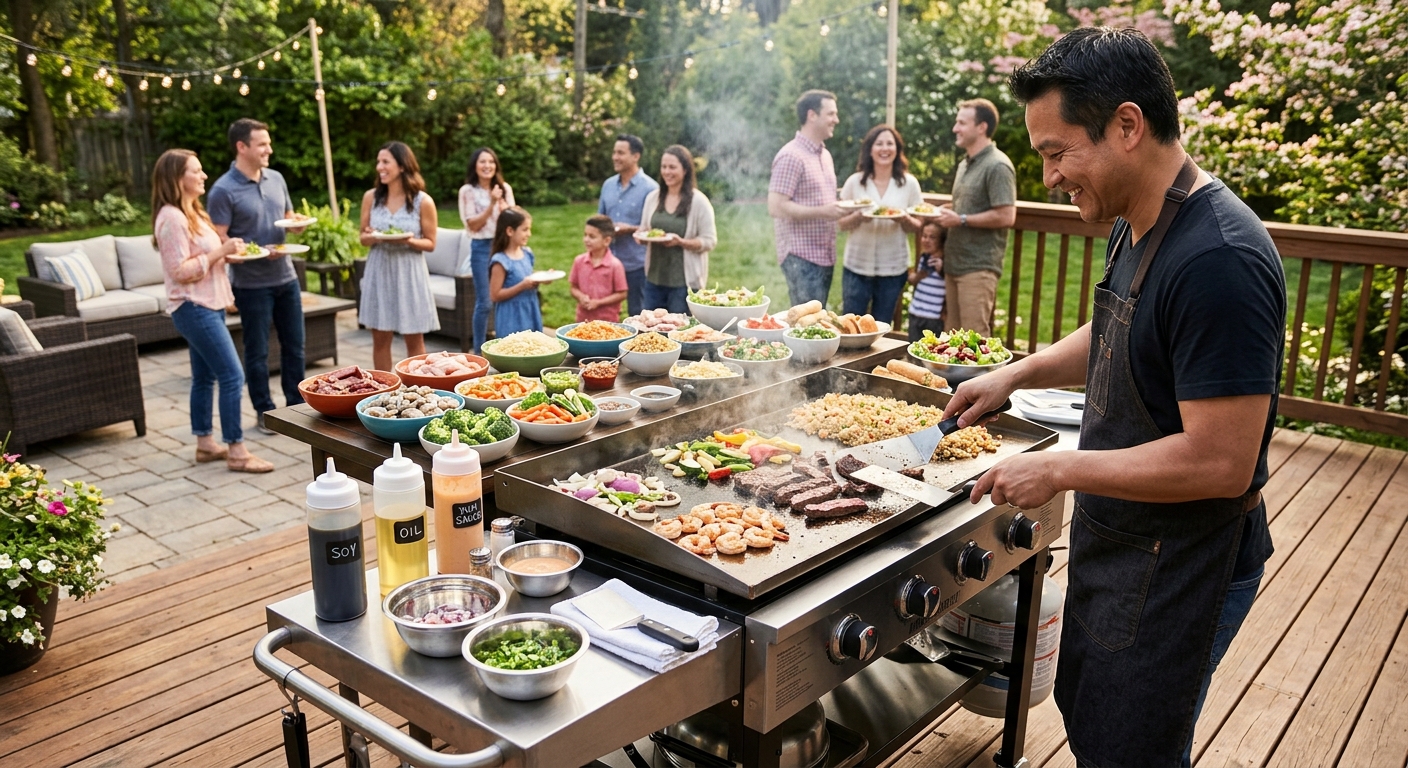
Introduction to Outdoor Hibachi Parties
Hosting an outdoor hibachi party is an exceptional way to bring the excitement, flavor, and theatrical entertainment of a Japanese steakhouse right to your own backyard. Whether you are celebrating a milestone birthday, a graduation, or simply gathering friends for a unique weekend dinner, the teppanyaki experience is universally beloved. By combining delicious, freshly cooked food with an engaging culinary performance, you can create unforgettable memories for your guests.
However, orchestrating a seamless outdoor culinary event requires careful planning and the right setup. From selecting the ideal cooking equipment to arranging comfortable seating and curating a delectable menu, every detail matters. In this guide, we will walk you through the essential steps to prepare for your event, ensuring everything runs smoothly. For more insights on professional execution, check out this guide on Hosting the Ultimate Hibachi Chef Party at Home: A Professional Guide.
Choosing the Right Hibachi Grill
The centerpiece of your outdoor hibachi party is undoubtedly the grill itself. Teppanyaki-style cooking relies on a large, flat iron griddle that can reach and maintain high temperatures. When selecting a grill, you must consider the size of your party, your budget, and the available space in your backyard.
For smaller gatherings, portable tabletop griddles powered by propane or electricity can suffice. They are easy to set up and store. However, for larger parties where the chef needs ample space to perform tricks and cook multiple courses simultaneously, a freestanding, multi-burner gas griddle is highly recommended. These larger units offer varied temperature zones, allowing the chef to sear a steak on one side while gently warming fried rice on the other.
Here is a quick comparison of the two primary types of flat-top grills suitable for a backyard teppanyaki setup to help you decide which best fits your needs.
| Grill Type | Fuel Source | Cooking Surface Area | Best For | Mobility |
|---|---|---|---|---|
| Portable Tabletop Griddle | Propane or Electric | 200 - 300 sq. inches | Small parties (4-6 guests) | Highly Portable |
| Freestanding Gas Griddle | Propane | 500 - 800+ sq. inches | Large parties (10+ guests) | Heavy / Wheeled |
Setting Up the Dining Area
The layout of your seating area is crucial for replicating the authentic hibachi restaurant experience. In a traditional setting, guests sit around a U-shaped or L-shaped counter, facing the chef directly. While you may not have a custom-built teppanyaki table in your yard, you can recreate this dynamic using folding tables and strategic seating arrangements.
The U-Shape Configuration
Arrange three rectangular tables in a U-shape, placing the freestanding grill in the open center. This allows every guest an unobstructed view of the chef's performance, from the classic onion volcano to the flying shrimp catch. Ensure there is enough space between the grill and the tables to guarantee the safety of your guests from sudden flare-ups or splashing oil.
Ambiance and Decor
Enhance the dining experience by incorporating subtle Japanese-inspired decor. Consider stringing paper lanterns above the dining area, using bamboo placemats, and providing quality reusable chopsticks. Adequate lighting is essential, especially if the party extends into the evening. Warm, ambient lighting will make the food look appetizing and keep the focus on the cooking station. If you are exploring catering options in Southern California, you might want to look into the local food scene to find expert chefs who can provide all the necessary equipment and decor.
Menu Planning and Ingredients
A classic hibachi menu is structured yet versatile, typically consisting of an appetizer, soup or salad, the main entrees, and a dessert. Preparation is the key to a smooth service; all ingredients should be washed, chopped, and portioned before the cooking begins.
- Proteins: Offer a variety of high-quality proteins such as ribeye steak, chicken breast, shrimp, scallops, and even lobster tails. Ensure you ask guests about dietary restrictions in advance; tofu makes an excellent vegetarian alternative.
- Vegetables: Zucchini, onions, mushrooms, and broccoli are staples. They cook quickly and absorb the savory sauces beautifully.
- Carbohydrates: Fried rice and yakisoba noodles are essential. Preparing the rice a day in advance and chilling it will prevent it from becoming mushy when fried on the griddle.
- Sauces: No hibachi meal is complete without the iconic dipping sauces. Prepare a creamy, tangy Yum Yum sauce and a sharp, savory ginger sauce to accompany the meal.
For a comprehensive checklist on preparing your space and menu, review How to Plan a Backyard Hibachi Party: The Complete Guide.
Safety Considerations
Safety must be your top priority when hosting a cooking-centric event outdoors. Teppanyaki cooking involves high heat, open flames, and occasionally, airborne food items.
- Clearance: Keep the grill at least 10 feet away from any structures, overhanging tree branches, or flammable materials.
- Fire Extinguisher: Always have a functioning fire extinguisher nearby and know how to use it. A bucket of sand can also be useful for grease fires (never use water on a grease fire).
- Guest Proximity: Advise guests, especially children, to maintain a safe distance from the hot griddle. The chef should communicate clearly before performing any tricks that involve high flames.
Conclusion
An outdoor hibachi party is a fantastic way to elevate your backyard entertaining. By carefully selecting the right griddle, setting up a communal and engaging seating arrangement, prepping a diverse and delicious menu, and prioritizing safety, you can host a spectacular event. Whether you choose to don the chef's hat yourself or hire a professional to dazzle your guests, a well-planned teppanyaki night promises great food, abundant laughter, and memories that will last a lifetime.
Frequently Asked Questions
Do I need to hire a professional chef for a hibachi party?
While hiring a professional chef guarantees an authentic and entertaining experience, it is not strictly necessary. If you enjoy cooking and are willing to practice a few basic tricks, you can definitely act as the chef yourself.
What is the best oil to use on a hibachi grill?
You should use an oil with a high smoke point, such as canola, vegetable, or avocado oil. Traditional Japanese steakhouses often use a mixture of oil and butter for added flavor.
How far in advance should I start preparing the food?
It is best to start prepping all vegetables, proteins, and sauces earlier in the day. Rice for fried rice should ideally be cooked the day before and stored in the refrigerator to ensure the best texture on the grill.
Can a hibachi party be hosted in a small backyard?
Yes, but you will need to scale down the equipment. A portable tabletop griddle and a smaller, more intimate seating arrangement can work perfectly in a compact space, provided safety clearances are maintained.
Comments
Post a Comment