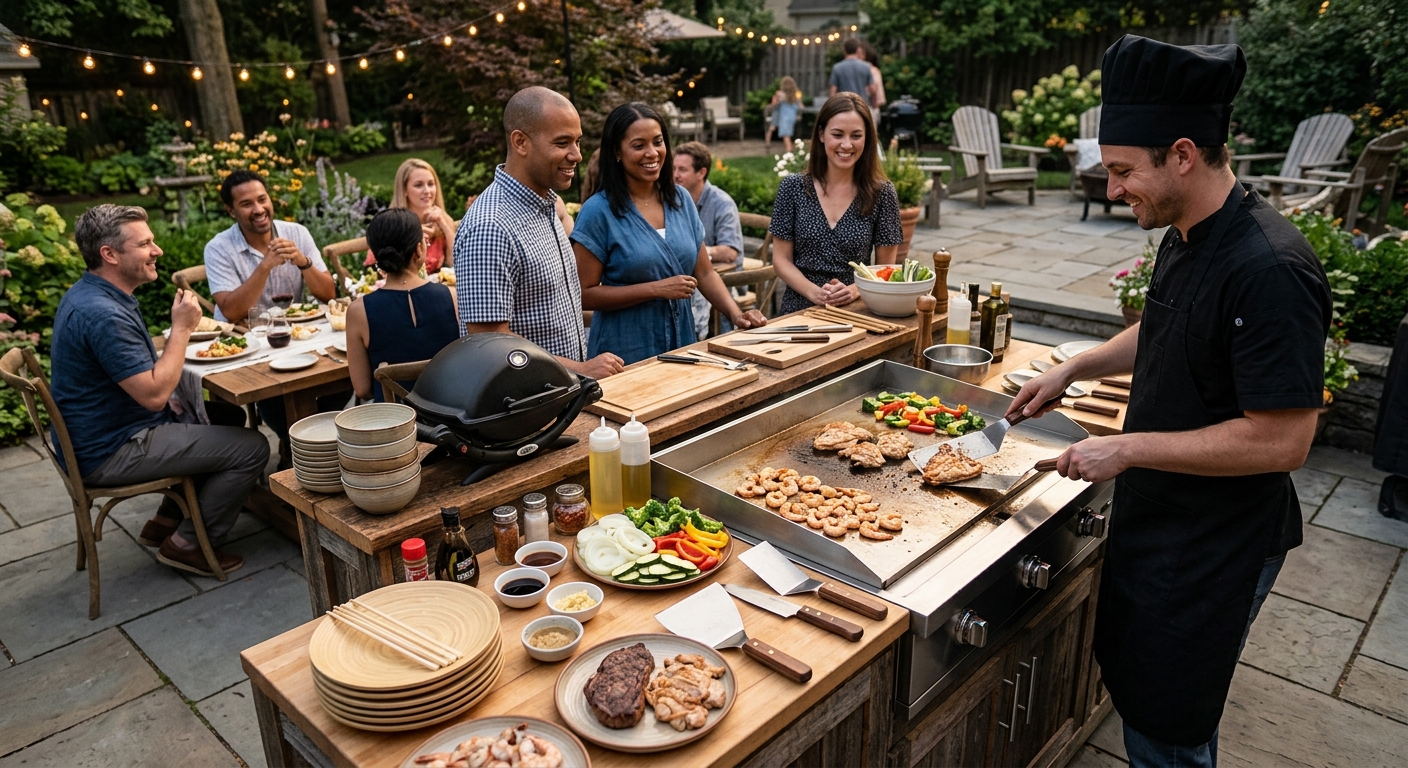
Planning the Perfect Backyard Teppanyaki Party
Hosting a backyard teppanyaki party is an excellent way to combine delicious food with interactive entertainment. Unlike a traditional barbecue, teppanyaki cooking requires specific tools and a flat-top grill to achieve that authentic Japanese steakhouse experience right in your own outdoor space. By gathering the right equipment, you can ensure a seamless and enjoyable event for your guests. To get started on the right foot, reviewing The Ultimate Hibachi Party Checklist for Beginners: Host Like a Pro is highly recommended, as it covers the foundational elements of hosting such an event.
The Heart of the Party: The Teppanyaki Grill
The most crucial piece of equipment for your party is the teppanyaki grill itself. Traditional grills feature a solid iron griddle, which allows for cooking a variety of ingredients simultaneously, from fried rice to delicate shrimp and robust steaks. When selecting a grill, consider factors such as size, fuel type (propane or electric), and portability.
Key Features to Look For:
- Even Heat Distribution: Essential for consistent cooking without hot spots.
- Large Cooking Surface: Allows you to entertain multiple guests at once.
- Grease Management System: Crucial for safe and easy cleanup.
Essential Teppanyaki Chef Tools
To cook like a professional teppanyaki chef, you will need a specific set of tools. These utensils not only make the cooking process efficient but also add to the theatrical flair that guests love.
| Tool | Purpose |
|---|---|
| Spatulas (Two) | Used for chopping, flipping, and serving. A pair is necessary for the classic teppanyaki style. |
| Scraper | Essential for keeping the grill clean between different courses. |
| Squeeze Bottles | Used for dispensing oil, water, soy sauce, and sake quickly and precisely. |
| Grill Press | Helps in achieving a perfect sear on meats. |
Setting the Scene: Tableware and Atmosphere
The atmosphere is just as important as the food. Creating an authentic dining environment enhances the overall experience. Ensure you have the right tableware, including chopstick rests, small dipping bowls for sauces (like yum yum sauce and ginger sauce), and sake cups. If you are looking for comprehensive guidance on structuring the evening, A Complete Step-by-Step Hibachi Party Plan for Your Next Event provides a fantastic blueprint.
In addition to tableware, consider comfortable seating that allows guests to watch the chef in action. For those looking to elevate their culinary knowledge and find local inspiration, browsing a local food directory can provide great ideas for side dishes and flavor profiles to incorporate into your menu.
Safety Equipment
Safety should never be overlooked when dealing with open flames, hot oil, and high-temperature grills. Always have a fire extinguisher nearby, specifically one rated for grease fires. Long-handled tools and heat-resistant gloves are also important to protect the chef from splattering oil and intense heat.
Conclusion
Hosting a backyard teppanyaki party is a memorable way to entertain family and friends. By ensuring you have the right equipment—from a high-quality flat-top grill to the essential chef's tools and safety gear—you can create an authentic and safe dining experience. With careful planning and the proper setup, your backyard will be transformed into the hottest culinary ticket in town.
Frequently Asked Questions (FAQ)
What is the difference between teppanyaki and hibachi?
Teppanyaki uses a solid, flat iron griddle to cook food, which is ideal for smaller ingredients like rice and finely chopped vegetables. Hibachi traditionally uses an open grate grill over charcoal. However, in North America, the terms are often used interchangeably to describe interactive flat-top cooking.
Can I use a regular barbecue grill for a teppanyaki party?
A standard grate grill will not work for traditional teppanyaki dishes like fried rice or eggs. You would need to purchase a flat-top griddle insert that fits over your existing barbecue to mimic the teppanyaki cooking surface.
What kind of oil should I use on a teppanyaki grill?
It is best to use oils with a high smoke point, such as vegetable, canola, safflower, or soybean oil. Butter and sesame oil can be used for flavor near the end of the cooking process, but they burn too quickly to be used as the primary cooking fat.
How do I clean my teppanyaki grill after the party?
While the grill is still warm, use a scraper to remove food residue. Squirt water onto the surface to loosen stubborn bits, scrape again, and wipe clean with paper towels. Once completely dry, apply a light coat of cooking oil to prevent rust.
Comments
Post a Comment