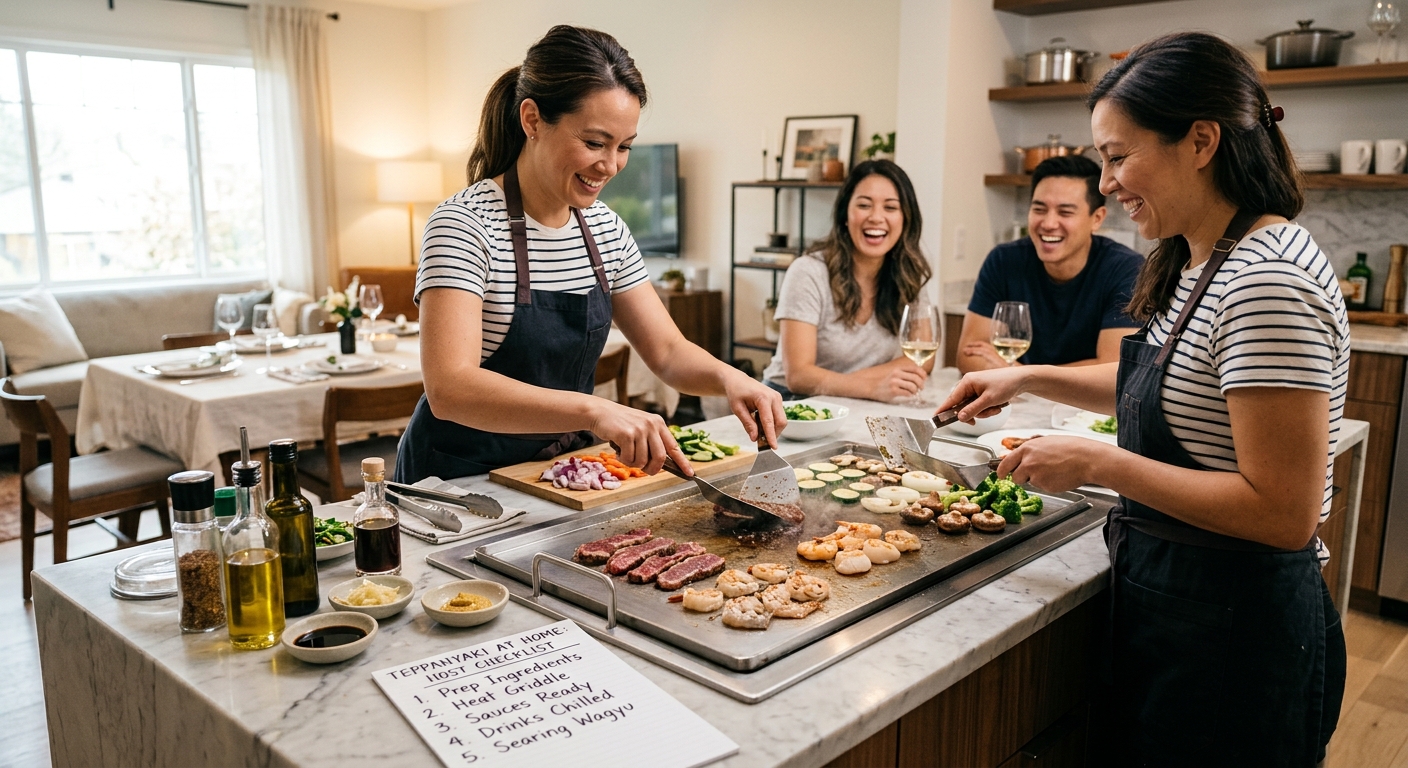
Introduction to Hosting Teppanyaki at Home
Hosting a teppanyaki party at home is a fantastic way to combine culinary excellence with engaging entertainment. Transforming your dining area or backyard into an interactive Japanese steakhouse requires careful planning and the right equipment. To help you orchestrate a seamless and memorable event, we have compiled a comprehensive teppanyaki at home checklist for hosts. Whether you are a seasoned home chef or a first-time entertainer, this guide will ensure you have everything covered.
Essential Equipment: Setting the Stage
The centerpiece of any teppanyaki experience is the griddle. While professional chefs use large, built-in iron plates, you can easily replicate the experience with a high-quality electric teppanyaki grill or a flat-top griddle that sits on your stovetop or outdoor grill. When selecting your cooking surface, prioritize even heat distribution and a non-stick or well-seasoned finish.
Equally important are the utensils. You will need a set of professional-grade spatulas (ideally two, for tossing and chopping), a sharp chef's knife, long cooking tongs, and squeeze bottles for oils, soy sauce, and water. A grill scraper is also essential for keeping the cooking surface clean between courses. For a deeper dive into the gear you need, check out this excellent resource on Essential Items for a Home Hibachi Party: A Professional Guide.
The Ingredient Checklist: Quality Matters
Teppanyaki relies on the natural flavors of high-quality, fresh ingredients, quickly seared to perfection. Your shopping list should be divided into proteins, vegetables, and condiments.
Proteins
- Beef: High-grade sirloin, ribeye, or tenderloin, thinly sliced.
- Seafood: Jumbo shrimp (peeled and deveined), scallops, and salmon fillets.
- Poultry: Boneless, skinless chicken breasts or thighs, cut into bite-sized pieces.
- Tofu: Firm tofu, pressed and cubed, for vegetarian guests.
Vegetables
- Zucchini and yellow squash, sliced into coins or sticks.
- Mushrooms (button or shiitake), halved.
- Onions, thickly sliced for the classic onion volcano.
- Bean sprouts, washed and dried.
- Carrots, julienned or sliced thinly.
Sauces and Seasonings
A true teppanyaki experience is elevated by its dipping sauces. Prepare or purchase traditional ginger sauce (excellent for seafood and vegetables) and mustard sauce (perfect for beef and chicken). Additionally, ensure you have plenty of soy sauce, teriyaki glaze, garlic butter, sesame oil, cooking oil (like canola or vegetable), salt, and freshly ground black pepper.
Preparation: The Key to a Smooth Performance
As the host and chef, your goal is to entertain while you cook. This means all preparation must be completed before your guests arrive. Wash, chop, and portion all ingredients into separate, visually appealing bowls. Pre-mix your dipping sauces and portion them into individual ramekins for each guest.
Set your table with chopsticks, plates, and napkins. If you are serving fried rice—a staple of the teppanyaki experience—cook the rice a day in advance and store it in the refrigerator. Cold, day-old rice fries up perfectly without becoming mushy. For more tips on orchestrating the perfect event, review this DIY Hibachi Party Planning Guide: Host an Unforgettable Experience.
Comparing Teppanyaki Grill Options
Choosing the right grill is crucial. Below is a comparison of common home teppanyaki grill options to help you decide which fits your hosting style.
| Grill Type | Heat Source | Portability | Best For |
|---|---|---|---|
| Electric Teppanyaki Griddle | Electric Outlet | High | Indoor dining table cooking |
| Cast Iron Reversible Griddle | Stovetop / Gas Burner | Medium | High-heat searing on existing stoves |
| Outdoor Flat Top Gas Grill | Propane Tank | Low | Large backyard parties |
Ambiance and Entertainment
Teppanyaki is not just about the food; it is a theatrical dining experience. Create an inviting atmosphere with appropriate lighting and subtle, ambient music. When cooking, do not be afraid to try some basic teppanyaki tricks, such as the famous onion volcano, tossing a shrimp tail into your chef's hat, or juggling spatulas. Practice these safely before the party.
If you are looking for culinary inspiration or want to explore local dining trends to incorporate into your menu, browsing platforms focused on Los Angeles food culture can provide fantastic ideas for fusion sauces and unique ingredient pairings.
Conclusion
Hosting a teppanyaki party at home is a rewarding endeavor that promises a night of fantastic food and interactive fun. By following this comprehensive checklist—securing the right equipment, sourcing premium ingredients, and focusing on meticulous preparation—you can step into the role of teppanyaki chef with confidence. Remember that the ultimate goal is to create a joyful, shared experience with your guests, so keep the energy high and enjoy the process.
Frequently Asked Questions (FAQ)
What is the difference between teppanyaki and hibachi?
In North America, the terms are often used interchangeably to describe interactive flat-top cooking. However, traditionally in Japan, a hibachi is a small, open-grate charcoal grill, while teppanyaki refers to cooking on a solid iron griddle (teppan).
What type of oil is best for teppanyaki cooking?
It is best to use oils with a high smoke point, such as canola, vegetable, safflower, or soybean oil. Avoid extra virgin olive oil, as it will smoke and burn at the high temperatures required for teppanyaki.
Can I host a teppanyaki party indoors?
Yes, but ventilation is key. If using a stovetop griddle, ensure your range hood is on high. Electric teppanyaki griddles designed for tabletop use generally produce less smoke, but it is still advisable to keep a window open or a fan running.
How far in advance should I prepare the ingredients?
You can wash, chop, and portion your vegetables and proteins earlier in the day. Keep them tightly covered in the refrigerator until about 20 minutes before you plan to cook, allowing the proteins to lose some of their chill for more even cooking.
Comments
Post a Comment